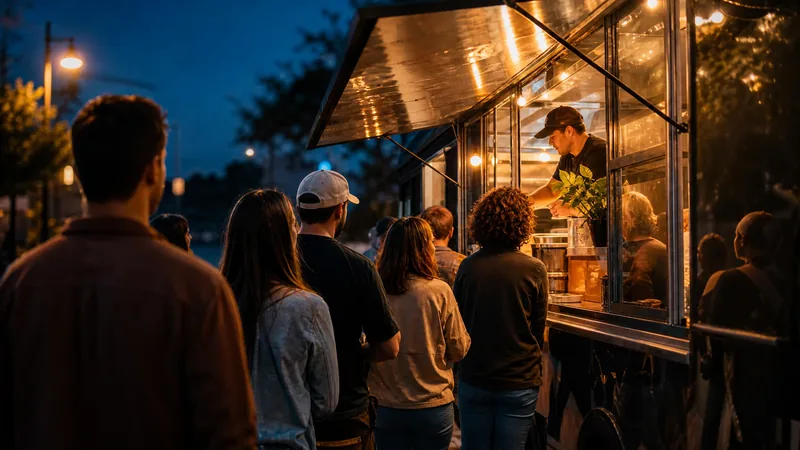
How to Start a Food Truck Business in South Dakota: $38 State Mobile License, Plumbed Three-Compartment Sink Rule and the $75 Sioux Falls Mobile Food Vendor License
Learning how to start a food truck in South Dakota means dealing with two separate state tracks that first-time operators often mix up. The first is food safety. The Department of Health (DOH) licenses mobile food service and sets the rules for how your truck is built and run. The second is business and tax registration, which runs through the Secretary of State and the Department of Revenue. Cities add a third layer. Sioux Falls requires its own $75 annual mobile food vendor license, and Rapid City uses a different permit and license process.
This guide follows the order that tends to work best: entity and tax setup first, then truck design and DOH plan review, then the state license and local permits. Use it as a checklist, and confirm every fee and deadline with the agency that administers it before you spend money.
Disclaimer: This article is informational content, not legal or tax advice. Rules and fees change, and city ordinances can be more specific than state law. Consult a qualified South Dakota attorney or CPA before you choose a business structure or make tax or contract decisions.
What You Need Before You Start
Gather these items first. The DOH plan review is the step most likely to delay you, so start it early.
- A business name that meets South Dakota naming rules and is not already on the Secretary of State's records
- A South Dakota registered agent with a physical street address in the state, plus a mailing address if it is different
- A trailer, van, RV or similar enclosed vehicle that you can build out to DOH standards
- A written menu and a list of the equipment each item needs
- A commissary agreement, unless your truck washes and stores all utensils on board
- A staff member with an 8-hour food manager certification (see Step 4)
- A certificate of insurance if you plan to work in Sioux Falls
- A separate business bank account and a system for tracking sales tax you collect
Step-by-Step: How to Start a Food Truck in South Dakota
Step 1: Form your business and reserve your name
If you form an LLC, file Articles of Organization with the South Dakota Secretary of State. The filing costs $150 online or $165 by paper. Online filings are processed immediately upon payment. Paper filings average 1 to 3 business days. The name must include Limited Liability Company, Limited Company, or an abbreviation such as LLC or L.L.C. Limited may be abbreviated as Ltd. and Company as Co. (SDCL 47-34A-105, 47-1A-401). Before you file, search the name in the state business search. If you need time, you can reserve an LLC name for 120 days for $25.
Every LLC files an annual report for $55. It is due on the first day of the anniversary month of the original filing. An expedited option is available for a $50 fee.
If you operate under a name other than your own legal name without forming an entity, you need a fictitious business name (DBA). It costs $10 per name, is valid for five years, and costs $10 to renew or amend. You can file it online through the Secretary of State or by paper at any county Register of Deeds office. South Dakota has no personal or corporate income tax, so choosing between a sole proprietorship, LLC and corporation is mainly about liability and paperwork. Ask a CPA which structure fits your situation.
Step 2: Get your free sales tax license
Any business with a physical presence in South Dakota must hold a sales tax license from the Department of Revenue before making taxable sales. The license is free. Your food truck has a physical presence, so the $100,000 remote seller threshold does not apply to you. Apply online through the Department of Revenue's sales tax permit system.
The state sales tax rate is 4.2% through June 30, 2027. It is scheduled to return to 4.5% on July 1, 2027 (SDCL 10-45-2). South Dakota taxes most services, not only goods, so check how your menu and catering fees are treated. Cities may add a municipal sales tax of 1% to 2%, and some cities also apply a 1% gross receipts tax on prepared food. Counties do not levy a sales tax.
South Dakota has no resale certificate. When you buy food or supplies for resale, give your supplier an exemption certificate instead. Keep copies of every certificate you give or receive.
Step 3: Submit layout plans and build to DOH mobile unit rules
Submit layout plans to DOH at least 30 days before you build a new unit or start a major renovation. Changes made without review can force rework. Confirm current requirements with DOH, since its mobile food service guidance is the controlling reference. The core rules are:
- Unit type: an enclosed trailer, van, pushcart, RV or similar unit
- Hand sink: with hot and cold running water
- Three-compartment sink: plumbed, unless the limited-menu waiver applies (see the sink section below)
- Retention tank: at least 15% larger than the potable water tank
- Hood: a Type I hood over any smoke or grease-producing cooking
- Commissary: required unless utensil washing and storage are done on board
- Home kitchens: food prepared in a private home may not be sold from the unit
- Temperatures: hot food held above 140 degrees F and cold food held below 41 degrees F
The commissary and sink rules work together. If your truck handles all dishwashing and utensil storage on board, you may not need a commissary, but you will need the on-board equipment to do it properly.
Step 4: Apply for the $38 state mobile food service license
Under SDCL 34-18-16, a mobile food service establishment license costs $38 per year and is issued by DOH. Apply after your unit has passed review and inspection. Keep the license in the truck, because inspectors may ask for it on site.
DOH requires at least one staff person with an 8-hour food manager certification (ARSD 44:02:07:03). Ask DOH how this requirement applies to mobile units before you hire, because the answer determines who must be certified and when. Plan to have the certified person on every shift you run, and plan to train the rest of your crew on handwashing, cooling and temperature logging.
Step 5: Secure your city license
Most South Dakota cities license specific trades rather than every business, so your city may not require a mobile vendor license at all. Check with the city clerk or licensing office for each city where you plan to operate. The three cities below have specific rules that are documented:
- Sioux Falls: requires a mobile food vendor license. See the section below for details.
- Rapid City: requires a Community Development permit and a city license. Confirm the fees with the Rapid City Finance Office.
- Sturgis: rally vendors must follow the rules on the City of Sturgis page. Check that page before you plan any rally events.
Step 6: Buy the required insurance
Insurance requirements come from cities and event organizers, so you may need more than one policy. Sioux Falls requires a certificate of insurance of $1,000,000 per occurrence and $2,000,000 aggregate, naming the City as an additional party. Ask a commercial insurance agent about general liability and commercial auto coverage for a truck that operates on public roads, and request certificates before you apply for any event.
Step 7: Plan events and temporary licenses
A temporary food service license for a fair, festival or similar event costs $38 for 30 days. Fairs are exempt from the fee, and nonprofit organizations are exempt from licensing, but neither exemption removes the health rules. Free food giveaways of up to three times a year, each lasting up to three consecutive days, need no license under SDCL 34-18-17, 34-18-18 and 34-20. Confirm those limits with DOH before you rely on them, especially if a giveaway is tied to a paid event.
Step 8: Operate within temperature and sourcing rules
Keep a temperature log for hot and cold holding, and check it at every stop. Never prepare food in a private home and sell it from the truck. Keep your commissary paperwork, sales tax certificates and insurance certificates in one binder so an inspector or city official can see them quickly.
The Plumbed Three-Compartment Sink Rule Explained
DOH's mobile unit rules call for a plumbed three-compartment sink for washing, rinsing and sanitizing equipment. Many first-time builders assume a portable basin or bucket setup will satisfy the rule. It does not, unless the limited-menu waiver applies.
The waiver is available for limited-menu foods when the unit has a plumbed hand sink and uses one or two dispensing utensils. A menu of pre-packaged or simple items that fits this description may qualify. A menu with multiple prep steps, sauces or cut produce usually does not. Confirm your menu with DOH in writing before you buy equipment, since a waiver decision can change the build cost and layout significantly.
Even if you qualify for the waiver, the plumbed hand sink is still required. Plan the water system around both sinks from the start, and size your retention tank at least 15% larger than the potable tank so wastewater has room to go.
The $75 Sioux Falls Mobile Food Vendor License
Sioux Falls requires a mobile food vendor license with an annual fee of $75. The license expires on December 31 each year. Your unit must meet state Department of Health standards, and the City sets these operating limits:
- No more than 6 hours in one location within any 24-hour period
- No operation in residential areas
- No use of City lots or ramps without City approval
- A certificate of insurance of $1,000,000 per occurrence and $2,000,000 aggregate, naming the City
For the full checklist, call the Sioux Falls Police Records office at 605-367-7226 before you apply. Do not assume the Sioux Falls fee or limits apply in other cities. Each city sets its own rules.
Common Mistakes to Avoid
- Buying the truck before the layout review. A unit built without DOH plan review may need costly changes to sinks, tanks or the hood.
- Assuming a county health permit covers the truck. Food businesses are licensed by the state Department of Health. Do not treat the county as your food licensing agency.
- Skipping the sales tax license. The license is free, but operating without it puts you in a compliance hole from the first sale.
- Using a home kitchen for prep. Food prepared in a private home may not be sold from the unit.
- Misreading the sink waiver. The waiver covers a limited menu and one or two dispensing utensils. It does not cover a full menu.
- Missing the 30-day window. Layout plans must reach DOH at least 30 days before building a new unit or major renovation.
- Ignoring city-by-city rules. Sioux Falls, Rapid City and Sturgis each have their own requirements, and many other cities have none.
Expected Results and Timeline
Following these steps in order can help you avoid the most expensive rework, particularly in the truck build and the sink layout. Operators who file the entity, the sales tax license and the DOH plans early often find that the later steps move more smoothly. These outcomes are possible, not guaranteed, because processing times, inspection schedules and build-out timelines depend on the agencies and your contractors.
Revenue depends on location, menu, pricing and competition. No licensing step can promise a sales figure. Keep your marketing claims about food modest and supportable, and avoid health or nutrition claims unless you can document them.
Official Resources
- South Dakota Secretary of State business services: https://sdsos.gov/business-services/default.aspx
- SOSEnterprise online filing portal: https://sosenterprise.sd.gov/
- Business entity search: https://sosenterprise.sd.gov/BusinessServices/Business/FilingSearch.aspx
- Fictitious business name (DBA) filing: https://sosenterprise.sd.gov/BusinessServices/Fictitious/FictitiousHome.aspx
- Department of Revenue: https://dor.sd.gov/
- Sales tax permit application: https://apps.sd.gov/rv23cedar/main/main.aspx
- Department of Health: https://doh.sd.gov/ (confirm the mobile food service page for current unit rules)
- Small Business Development Center: https://sdbusinesshelp.com/small-business-development-center/
- SBA South Dakota district office: https://www.sba.gov/district/south-dakota
For a complex build, a financed truck or a multi-city route, talk to a qualified South Dakota attorney or CPA before you commit. This article is informational content, not legal or tax advice, and the fees, deadlines and rules above should be confirmed with the named agency before you act on them.
Keep exploring: related South Dakota guides
- How to Start a Coffee Shop Business in South Dakota
- How to Start a Catering Business in South Dakota
- How to Start a Restaurant in South Dakota
- How to Start a Brewery, Distillery or Winery in South Dakota
- How to Start an LLC in South Dakota
- South Dakota Business License
- How Much Does It Cost to Start a Business in South Dakota
- All South Dakota business types
- Every South Dakota guide in one place